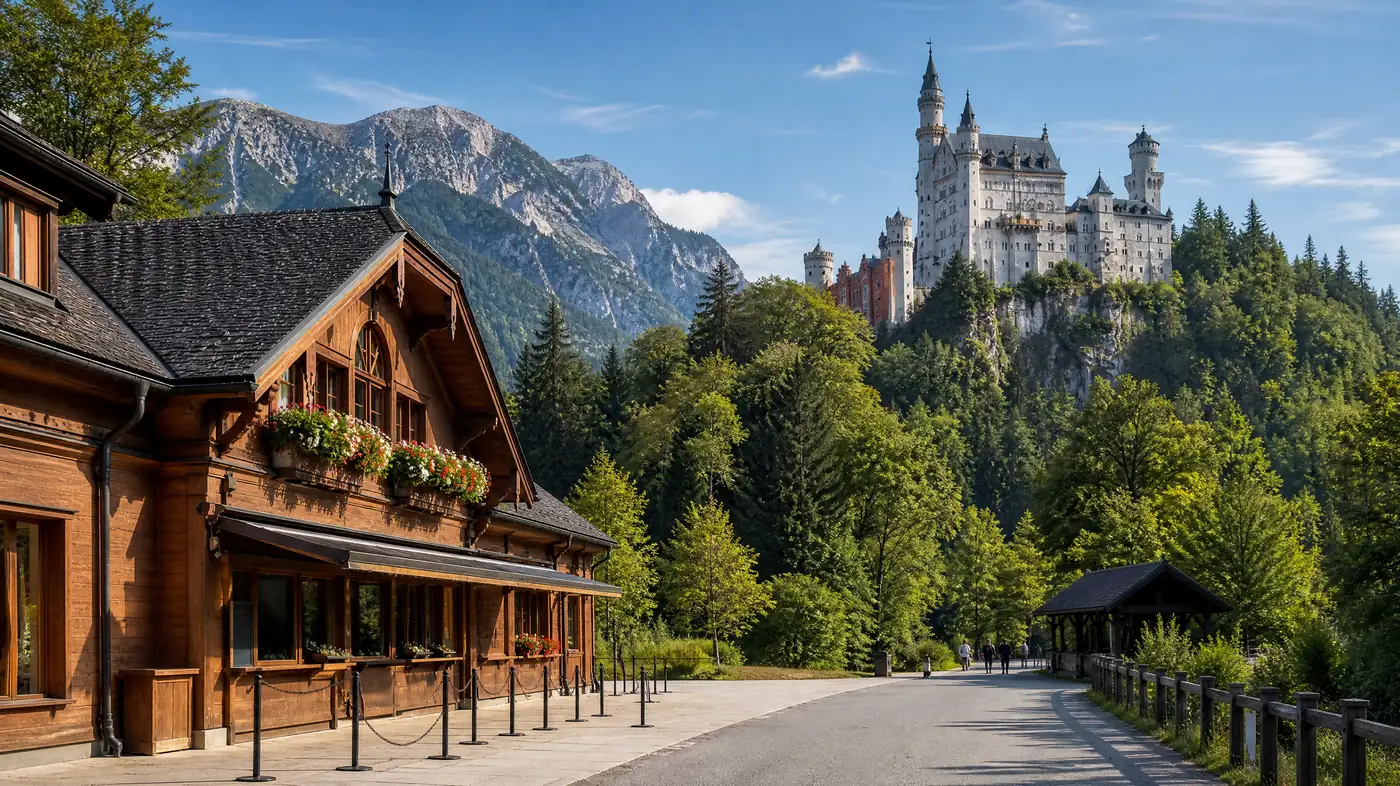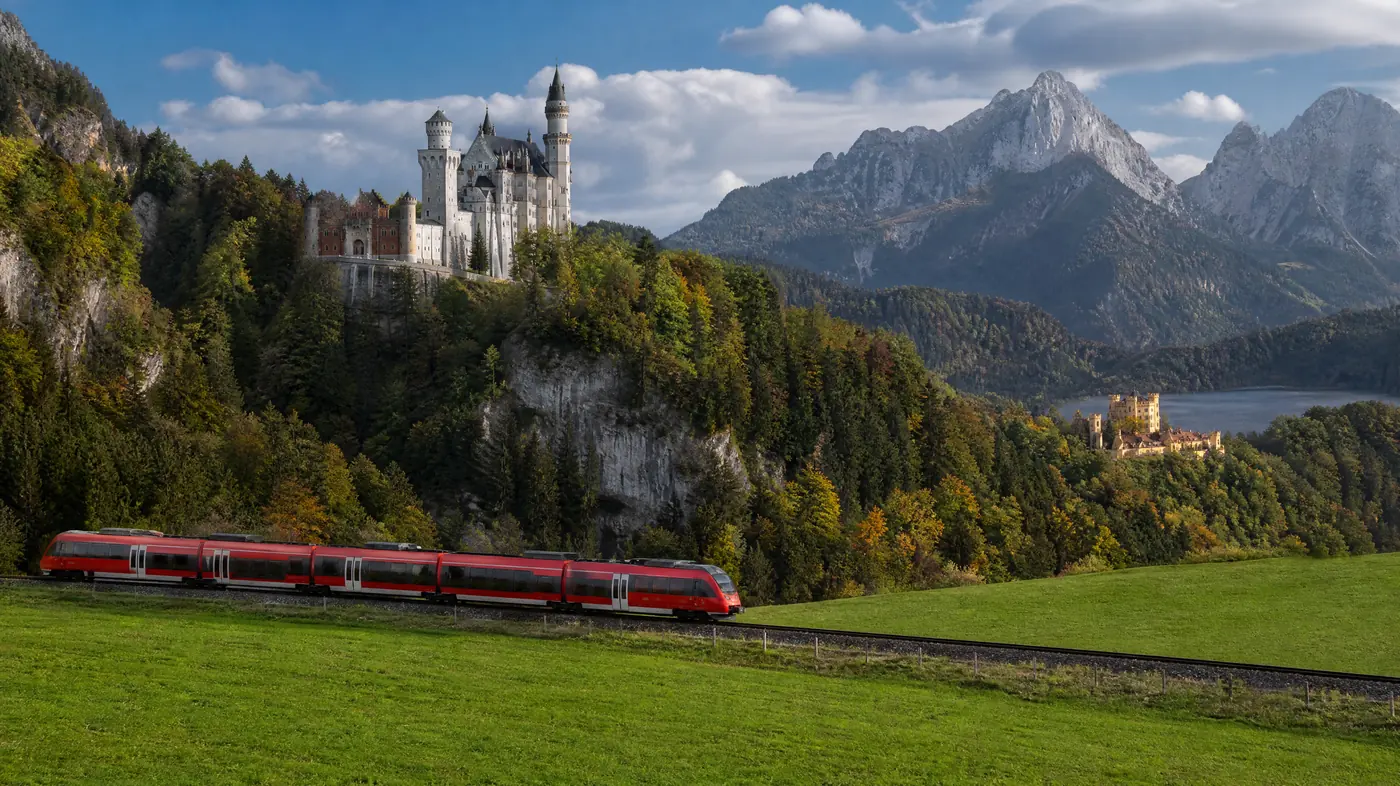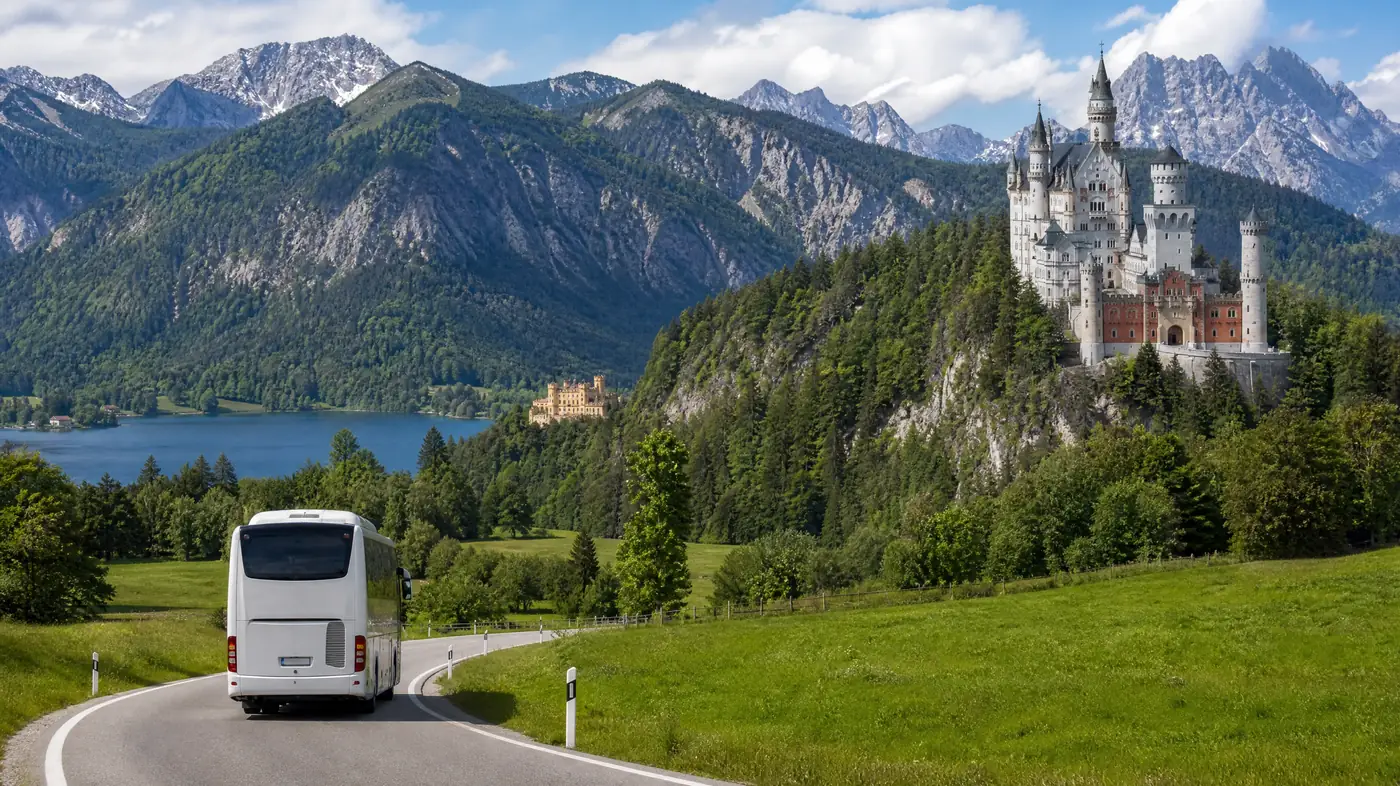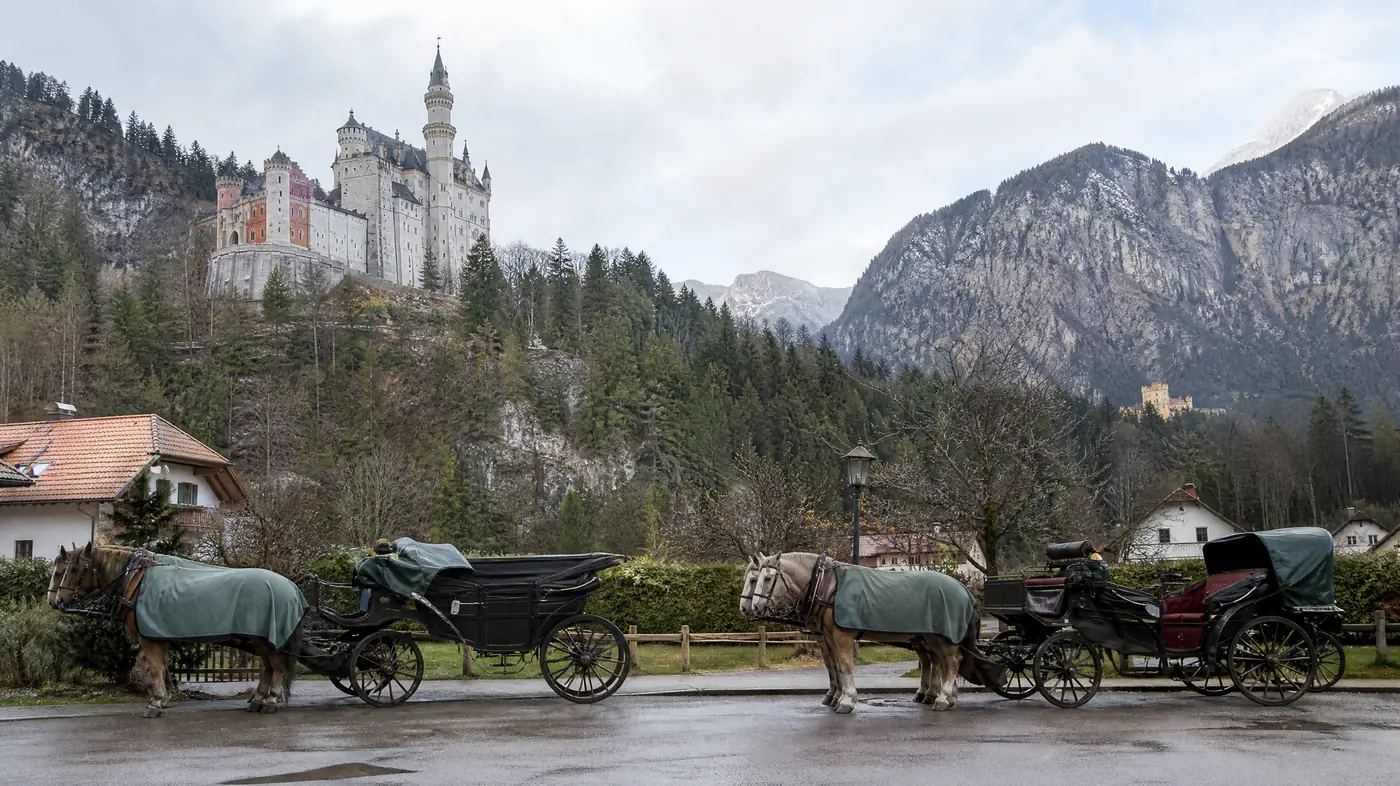
Booking choice: The premium two-castle tour, from $215.15 per person. Check dates Tour details
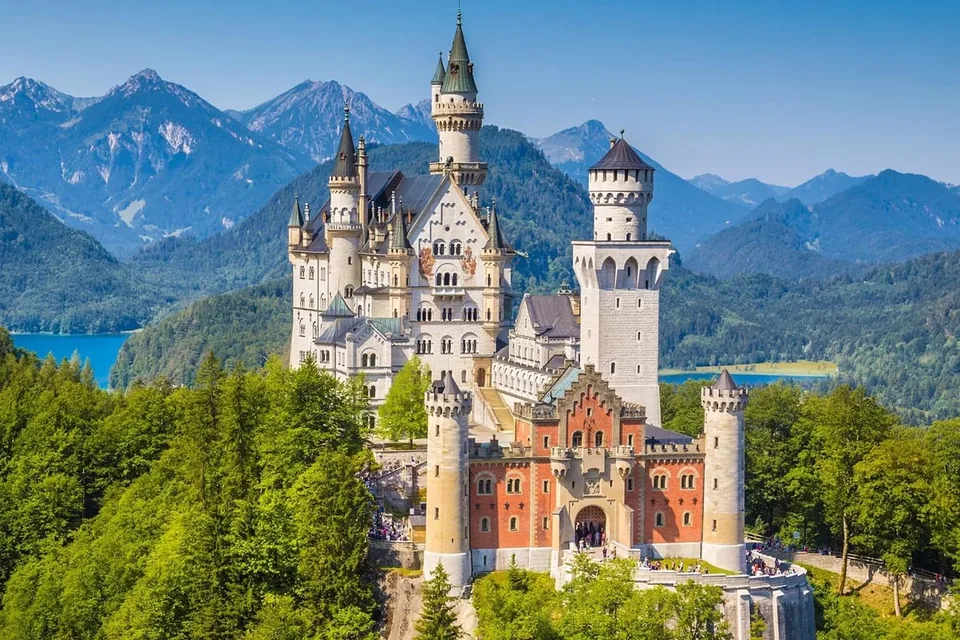
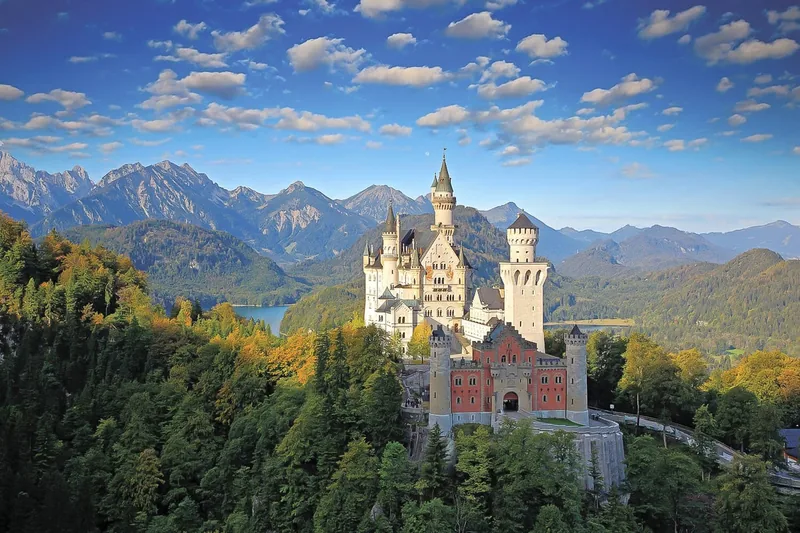
Neuschwanstein is younger than it looks. The foundation stone was laid in 1869, the king first slept in the finished rooms in 1884, and the last towers went up in 1892, six years after his death. Behind the "medieval" walls sit brick, steel and some of the most modern technology of its day.
Below: who built it and why, what the name means, the building years, what is inside, what happened in June 1886, the castle's war years as a Nazi art depot, the Disney connection and the films, and who owns it now.
The quick answer
Ludwig II of Bavaria began Neuschwanstein in 1869 as an idealized castle of the Middle Ages, inspired by the legends behind Richard Wagner's operas. He was declared unfit to rule in June 1886 and died days later in Lake Starnberg; the circumstances have never been fully explained. The castle opened to paying visitors weeks later and belongs to the Free State of Bavaria. The premium two-castle tour includes timed tickets for Neuschwanstein and Linderhof, from $215.15.
Who built Neuschwanstein Castle and why?
King Ludwig II of Bavaria, from 1869. He wanted a better recreation of an ideal medieval knights' castle than his father's Hohenschwangau, and a kingdom of his own after losing real power in 1866.
Ludwig, born on 25 August 1845, became king on 10 March 1864, aged 18. He spent his childhood summers at Hohenschwangau Castle, which his father, Crown Prince Maximilian (later Maximilian II), had bought as a ruin in 1832 and rebuilt, its walls painted with medieval legends. In May 1868 Ludwig wrote to Richard Wagner: "It is my intention to rebuild the old castle ruin of Hohenschwangau near the Pöllat Gorge in the authentic style of the old German knights' castles."
The Bavarian Palace Administration adds the political reason. In 1866 Bavaria, allied with Austria, lost the war against Prussia and had to accept an alliance that took away the king's command of his army in war. "From 1866, therefore, Ludwig II was no longer a sovereign ruler." In 1867 he began planning castles and palaces where he could be a real king: Neuschwanstein, Linderhof and Herrenchiemsee.
Sarah, on the premium tour: "Mat, our guide, was excellent. He was knowledgeable, and gave the experience the gravitas it deserved without any sensationalism." (Oct 2026)
What does Neuschwanstein mean?
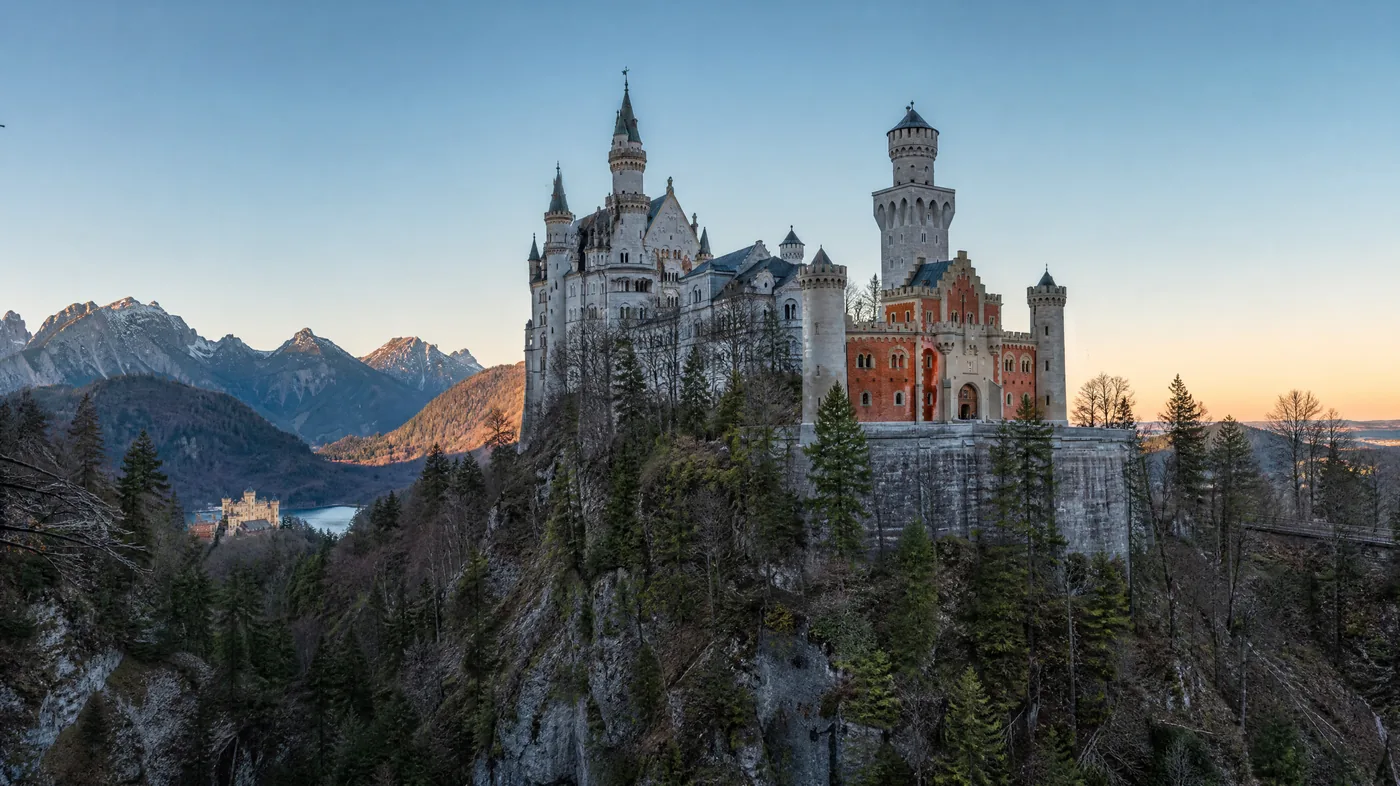
"New Swan Stone". Ludwig called it New Hohenschwangau Castle; it was renamed Neuschwanstein only after his death. In German it sounds roughly like "noy-SHVAHN-shtine".
The swan runs through the whole story. It was the heraldic animal of the Counts of Schwangau, whose successor Ludwig considered himself, and his father had already made it the leitmotif of Hohenschwangau. It is also the emblem of Lohengrin, the swan knight. Ludwig knew the legend from his father's murals as a boy and saw Wagner's opera on 2 February 1861; Wagner and Ludwig first met on 4 May 1864.
The castle's picture cycles are not scenes from the operas but from the medieval legends Wagner used: Tannhäuser, Lohengrin and Parzival, plus Sigurd, Gudrun and Tristan and Isolde. The Palace Administration says the king dedicated the castle to Wagner.
Hear the story from a guide on the way, then see the Throne Hall and Linderhof with timed tickets.
Check dates for the premium two-castle tourWhen was Neuschwanstein built?
From 1868 to 1892. The foundation stone was laid on 5 September 1869, Ludwig first stayed in the finished rooms in May 1884, and the Bower and the Square Tower were completed only in 1892.
The building years, from the Bavarian Palace Administration:
| Date | What happened |
|---|---|
| 1867 | Ludwig visits the Wartburg and Pierrefonds; the Wartburg's Singers' Hall becomes the model |
| Summer 1868 | Work starts on the site: up to 8 metres of rock removed for the foundations |
| 5 September 1869 | Foundation stone laid |
| 11 June 1872 | Gateway Building topped out; ready at the end of 1873, Ludwig stays there on visits |
| September 1872 | Work on the Palas, the main building, begins |
| 29 January 1880 | Palas topped out |
| May 1884 | Ludwig stays in the finished rooms for the first time |
| 13 June 1886 | Ludwig II dies in Lake Starnberg, aged 40 |
| 1886 | The castle opens to paying visitors within weeks (Wikipedia) |
| 1892 | Bower and Square Tower finished in simplified form |
The stage designer Christian Jank drew the first designs. The architect Eduard Riedel turned them into plans, Georg Dollmann took over in 1874 and Julius Hofmann finished the complex from 1886 to 1892. The walls are brick with pale limestone used only as cladding, and the Throne Hall sits in an encased steel frame added once the Palas was already standing. The Palace Administration calls the result not a copy of any building but "a characteristic example of historicism".
What is inside Neuschwanstein Castle?
The king's apartments and state rooms on the third and fourth floors: 14 rooms on the tour, from the Throne Hall to the Singers' Hall. The second floor was never finished.
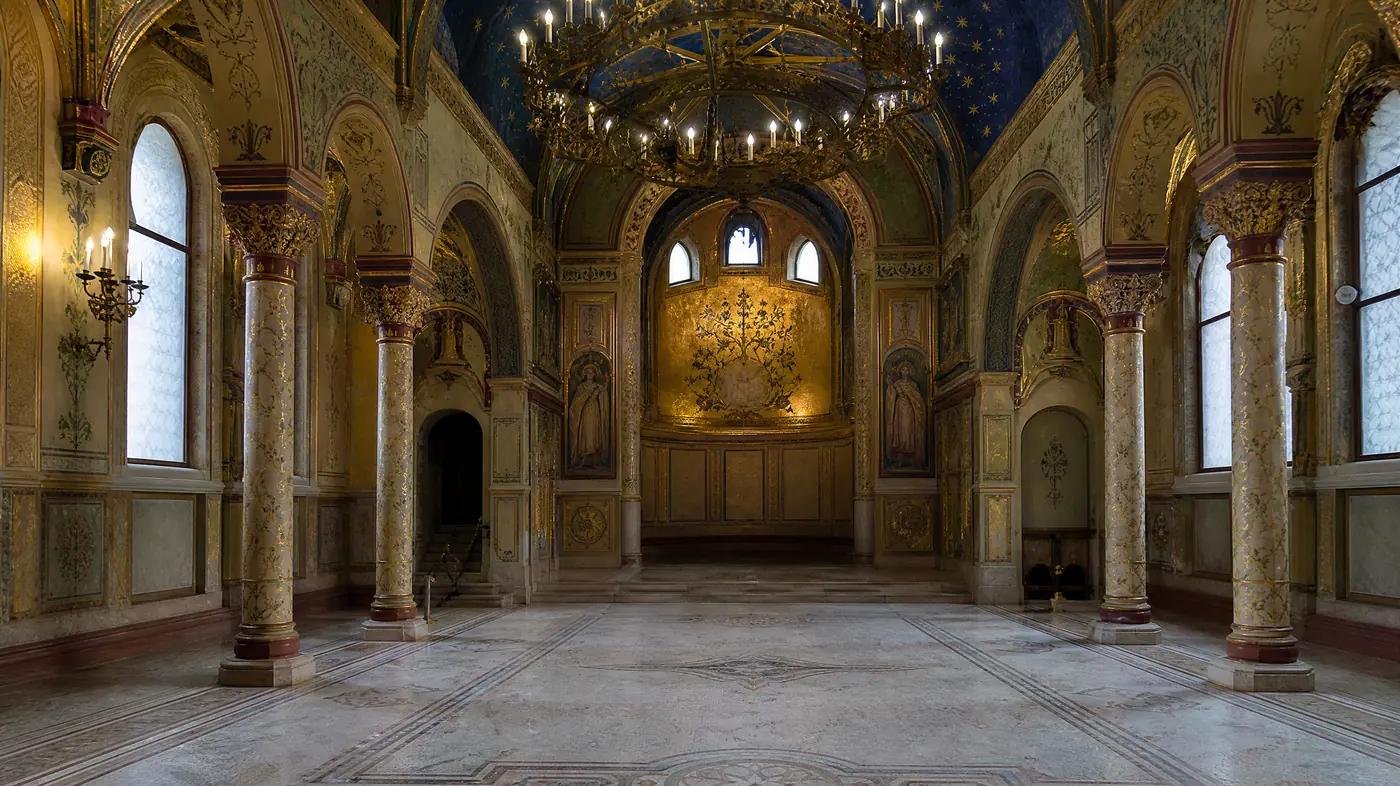
- The Throne Hall: planned as a modest audience room, turned into a monument to kingship "by the Grace of God" and modeled on the legendary hall of the Grail.
- The Singers' Hall, modeled on the Wartburg, painted with the Parzival saga.
- The bedroom, in late-gothic style, with an oak bed carved by Anton Pössenbacher and scenes from Tristan and Isolde.
- The Salon (Lohengrin), the Study (Tannhäuser), the Lower and Upper Halls (Sigurd and Gudrun), the Oratory and a small artificial grotto with a conservatory.
And the technology, behind the medieval look: hot-air central heating, running water on every floor, hot and cold water in the kitchen, automatic flushing toilets, an electric bell system, telephones on the third and fourth floors, a food lift, steam-driven cranes on the building site and window panes unusually large for the time. After the tour you can see the historic kitchen on the ground floor.
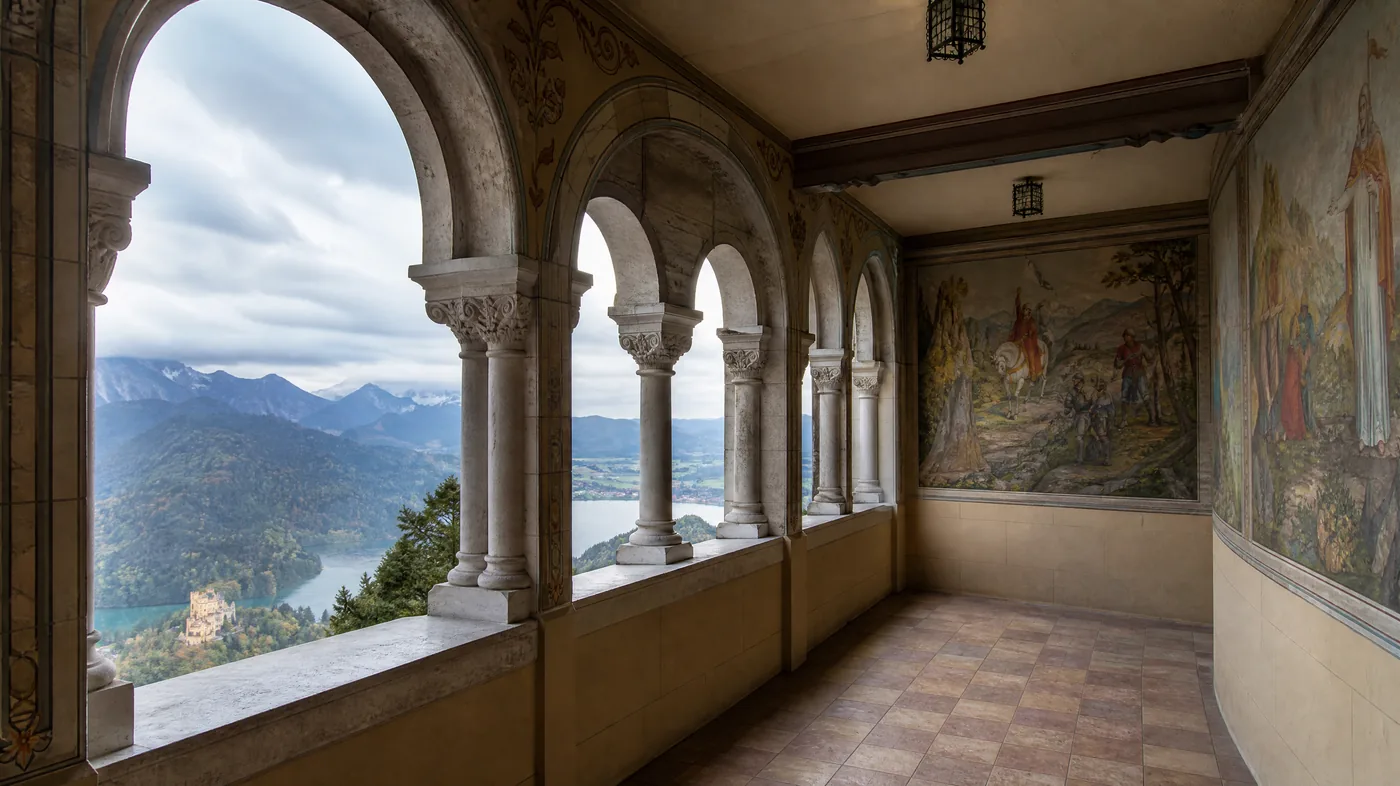
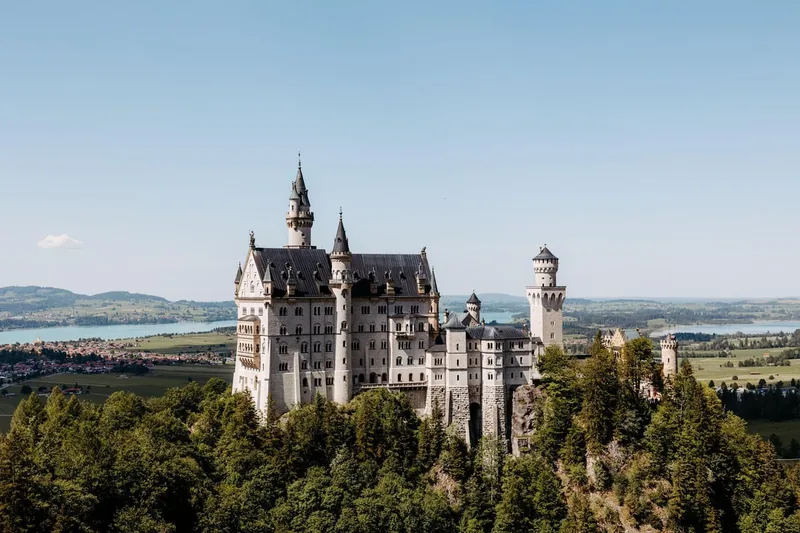
Timed tickets for Neuschwanstein and Linderhof, a group of 28 at most, a guide on the history all day and snacks on the coach.
Explore the premium two-castle tour Tour detailsWhat happened to Ludwig II in 1886?
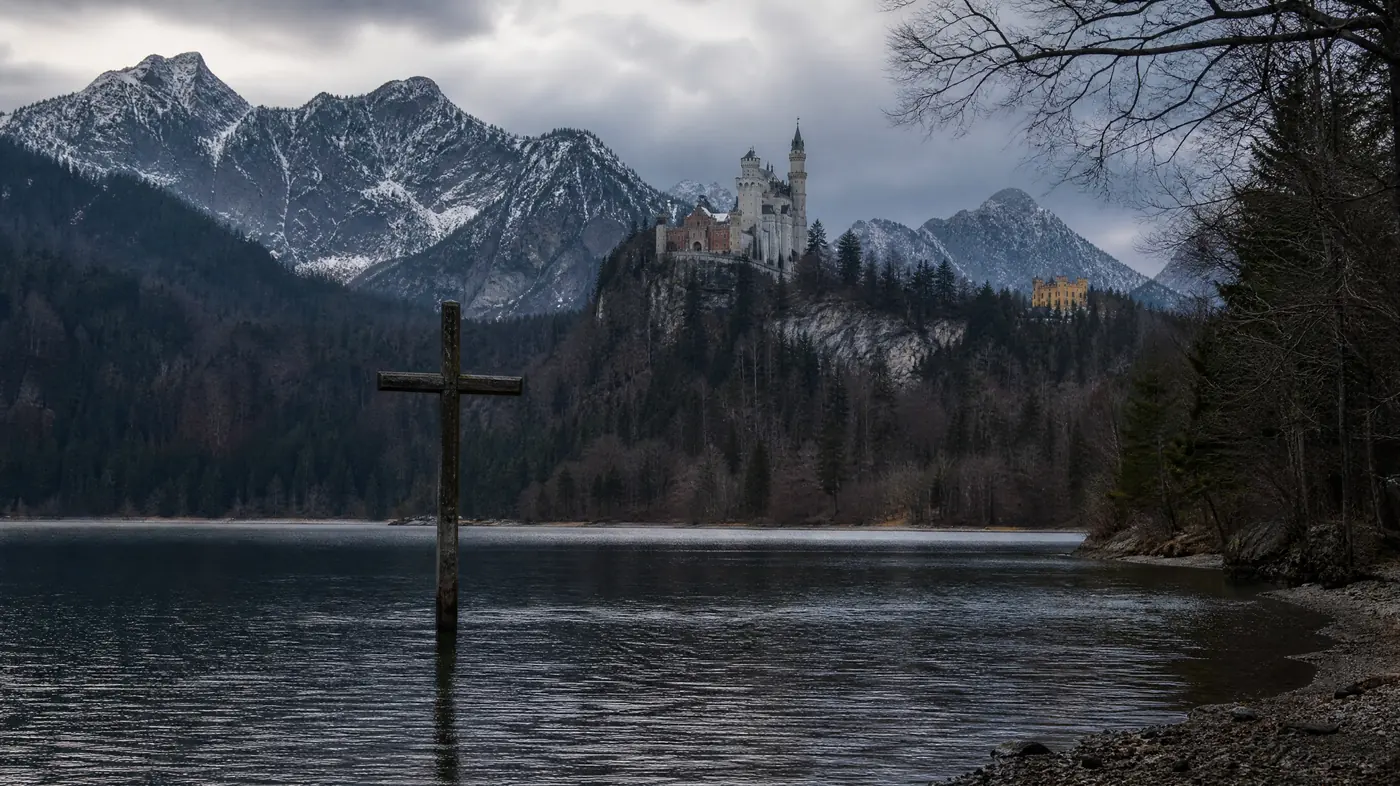
He was declared unfit to rule on 9 June 1886, arrested at Neuschwanstein on 12 June and taken to Berg Palace, and died on 13 June in Lake Starnberg, together with the psychiatrist Bernhard von Gudden. The circumstances have never been fully explained.
This is what people usually mean by the castle's dark history. The Bavarian Palace Administration's account: the king's building plans had gone far beyond his private means, from 1885 foreign banks threatened to seize his property, and the government had him declared unfit to govern and deposed, "a procedure not provided for in the Bavarian constitution". Prince Luitpold took over the regency on 10 June. Ludwig was 40.
How he and von Gudden died in the lake has never been settled, and we do not guess here. The nickname "Mad King Ludwig" came from others; in Bavaria he is still "the Kini". He was buried on 19 June 1886 in the crypt of St Michael's Church in Munich.
Ludwig never meant to open his castle. Within about six weeks of his death, the Prince Regent had it opened to paying visitors, and the construction debts were paid off by 1899.
What happened at Neuschwanstein in World War II?
From early 1941 it was a central depot of the Nazi ERR (Einsatzstab Reichsleiter Rosenberg) for art looted in France. US Monuments Men reached the castle in early May 1945.
The US National Archives tells the story. Neuschwanstein and Hohenschwangau were the largest caches of the ERR for works taken from French collections, among them the Rothschild, David-Weill and Veil-Picard collections. The castle also held about 1,300 paintings from Bavarian state castles and Munich museums.
- About 4 May 1945: Monuments Man James Rorimer reached Neuschwanstein: "Works of art were everywhere, most of them marked with Paris ciphers."
- The records: the ERR files found there included catalogues of 203 French private collections and cards for 21,903 confiscations.
- October 1945: restitution to France was set to begin.
Neuschwanstein and Linderhof in one day by coach, with a guide and the ticket option you choose.
Check dates for the Neuschwanstein and Linderhof tripWas Disney's castle inspired by Neuschwanstein?
Yes. The Walt Disney Family Museum says Herb Ryman's design for Sleeping Beauty Castle at Disneyland, which opened in 1955, was "inspired by the Neuschwanstein castle in Germany".
Ryman sketched it in a 1953 session with Walt Disney. Inspired by, not copied. Wikipedia also names the castle as an inspiration for Cinderella Castle.
What movie was filmed at Neuschwanstein? Several, per Wikipedia:
- Chitty Chitty Bang Bang (1968), the family musical.
- The Great Escape (1963).
- Spaceballs (1987), the spoof comedy.
- Two films about the king: Helmut Käutner's Ludwig II (1955) and Luchino Visconti's Ludwig (1972).
Katie, on the premium tour: "Ursula was amazing! Her stories were engaging and full of history. I'd definitely recommend!" (Nov 2026)
Who owns Neuschwanstein Castle today?
The Free State of Bavaria. The Bavarian Palace Administration runs it; Hohenschwangau Castle, across the valley, belongs to the Wittelsbacher Ausgleichsfonds.
A few facts for the coach ride:
- World Heritage: since 2025 Neuschwanstein is part of the UNESCO site "The Palaces of King Ludwig II of Bavaria", with Linderhof, the King's House on Schachen and Herrenchiemsee. Füssen Tourism dates it to 12 July 2025.
- Visitors: 1,086,432 in 2025, against nearly 1.5 million in 2019, with smaller tour groups since the renovation of the state rooms, per press reports. Wikipedia counts about 61 million visitors since the castle opened.
- Ludwig's palaces in all have had over 130 million visitors since his death, the Palace Administration says.
- Who lived there? Only Ludwig, and only for stays: in the Gateway Building on visits from the end of 1873, in the finished rooms from May 1884 until June 1886.
Hohenschwangau Castle, his father's summer home, has more than 90 wall paintings and can be seen on its own tour, €23.50 for adults in 2026. More on the World Heritage listing in our UNESCO post.
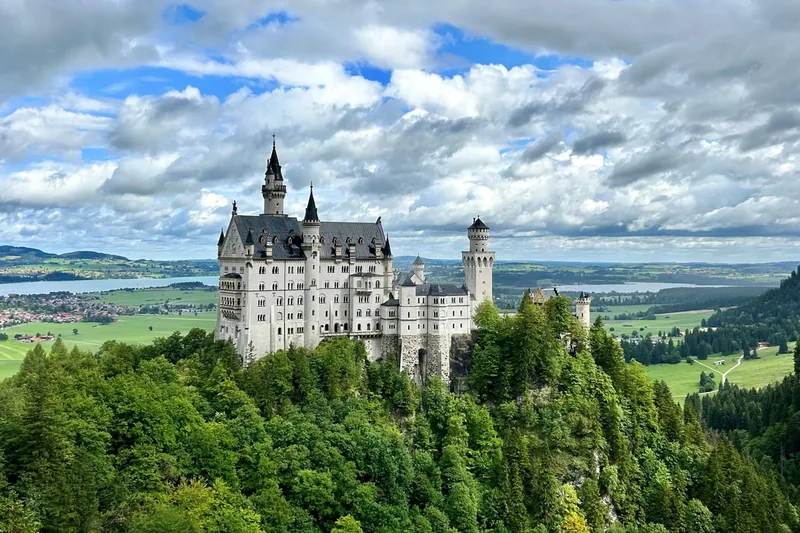
Ludwig's childhood home and his dream castle in one afternoon: reserved time slots and audio guides for Hohenschwangau and Neuschwanstein.
Explore the tickets for both castles Tour detailsFrequently asked questions
What does Neuschwanstein mean?
"New Swan Stone". Ludwig II called it New Hohenschwangau Castle; it was renamed Neuschwanstein only after his death in 1886.
Who lived in Neuschwanstein Castle?
Only King Ludwig II, on stays: in the Gateway Building from the end of 1873, and in the finished rooms from May 1884 until June 1886.
What happened to Ludwig II?
He was declared unfit to rule in June 1886 and died days later in Lake Starnberg, on 13 June 1886. The circumstances have never been fully explained.
Was Sleeping Beauty Castle inspired by Neuschwanstein?
Yes. The Walt Disney Family Museum says Herb Ryman's design for Sleeping Beauty Castle at Disneyland was inspired by Neuschwanstein.
Ready to book
Choose your day trip
Free cancellation up to 24 hours before on every option. Prices are from-prices in USD and move with the season.
Premium Neuschwanstein & Linderhof Small-Group Tour
- Timed tickets for Neuschwanstein and Linderhof
- Small group of up to 28
- Coach with extra legroom
Neuschwanstein & Linderhof Full-Day Trip
- Air-conditioned coach with a toilet on board
- Professional guide
- Neuschwanstein and Linderhof entry only on the option with tickets
Neuschwanstein & Hohenschwangau Castle Tickets
Both castles in one afternoon, with audio guides